Entry · Ref DZMQCA6F
Exactly How to Discover Senior Living Near Me That Concentrates On Dementia Care
- Posted
- 2026-11-25
- Last amended
- 2026-11-25
- Account
- @rylanofex973
Business Name: BeeHive Homes of Albuquerque NM - Assisted Living Facility
Address: 6401 Corona Ave NE, Albuquerque, NM 87113
Phone: (505) 221-6400
BeeHive Homes of Albuquerque NM - Assisted Living Facility
BeeHive Village is a premier Albuquerque Assisted Living facility and the perfect transition from an independent living facility or environment. Our Alzheimer care in Albuquerque, NM is designed to be smaller to create a more intimate atmosphere and to provide a family feel while our residents experience exceptional quality care. Memory loss, dementia and Alzheimer's disease are becoming quite pervasive in our society. Dementia care assisted living in Albuquerque NM offers catered memory care services, attention and medication management, often in a secure dementia assisted living in Albuquerque or nursing home setting. We invite you to come and visit our elder care and feel what truly makes us the next best place to home.
6401 Corona Ave NE, Albuquerque, NM 87113
Business Hours
Searching for senior living near me can really feel straightforward at first, till dementia goes into the image. After that the inquiry modifications. You are no longer just contrasting houses, eating rooms, and activity schedules. You are looking for a place that can deal with amnesia, altering habits, safety concerns, medication routines, family interaction, and the psychological weight that comes with all of it.
That is a various type of search, and it is worthy of a various sort of attention.
Families typically start by typing memory care near me into a search bar and wishing the very first couple of results will certainly tell the whole story. Sometimes they get lucky. More frequently, they find themselves checking out glossy brochures that claim the appropriate points without explaining just how care in fact works on a Tuesday mid-day when someone is anxious, overwhelmed, or attempting to leave the structure. The most effective neighborhoods for dementia care generally do not simply advertise memory care. They can explain it clearly, show it at work, and speak truthfully concerning what they succeed and where their limitations are.

If you are in that search now, you are most likely balancing love, seriousness, and tiredness. You may be assisting a parent, partner, or other elder care family member that still has great days mixed with harder ones. You might also be attempting to understand the distinction in between assisted living, memory care, skilled nursing, and respite care without coming to be a full-time researcher. That is where a practical technique helps.
Start by calling the level of support that is in fact needed
Many households start with location, which makes feeling. Closeness issues. You intend to be able to visit, bring apparel, go to care conferences, and react swiftly if something changes. However area alone is not enough. Prior to you compare communities, get honest regarding what the person requires today, not what they needed 6 months ago or what everybody wished they would still manage.
Dementia care is not one-size-fits-all. A person that is forgetful and requires assist with dishes and pointers might still do well in assisted living with strong guidance. A person that wanders, comes to be dizzy in unfamiliar rooms, or requires aid with nearly every part of the day will generally require a committed memory care area. If there are regular drops, complicated memory care albuquerque nm drug demands, swallowing issues, or sophisticated clinical problems, you may require a greater degree of care than memory care alone can offer.
This distinction issues since some communities are exceptional at companionship and regular yet are not geared up for the full variety of habits dementia can bring. Others are built especially for it. Hallways are simpler to browse, departures are secured, staff are educated to reroute rather than challenge, and daily life is structured to reduce anxiety. That framework can make a big difference for both safety and dignity.
An excellent way to consider it is this: if the person can still function with suggestions and restricted oversight, senior care or assisted living may be enough for now. If complication is creating actual threats, memory care is worthy of significant consideration.
What makes dementia-focused senior living different
A community that concentrates on dementia care need to really feel different the moment you walk in. Not because it looks clinical, however because it feels calmer and more intentional.
Hallways are normally developed to prevent stumbling blocks and unneeded complication. Common rooms have a tendency to be noticeable and easy to reach. Team member often welcome citizens by name and utilize easy, reassuring language. Activities are much less about maintaining people busy and much more concerning giving the brain and body familiar rhythms. Music, folding towels, sorting objects, gentle workout, and recurring tasks frequently work much better than loud or challenging group events.
The difference appears in the information. Meals could be offered at constant times, with cues and help constructed in. Shower rooms may have much better signs. Illumination might reduce trailing that can set off anxiety. Some communities use color signs or memory boxes outside resident rooms. Those are not attractive touches. They are tools that help maintain freedom longer.
There is additionally a major distinction in staffing style. In general senior living, staff may support freedom and light everyday help. In dementia care, personnel requirement to recognize modifications in mood, frustration, sleep patterns, and confusion, occasionally before households discover anything. They need to recognize just how to approach somebody who is scared, repetitive, dubious, or immune to care without escalating the minute. That takes training, patience, and consistency.
When you tour, ask how much time personnel remain. High turn over can wear down trust promptly, particularly with memory loss. Residents typically rely on familiarity more than they can describe. An unfamiliar person assisting with showering or dishes can really feel threatening. An acquainted face can make the distinction in between a tranquil morning and a difficult one.
Finding the best place near you without getting shed in marketing
A search for memory care near me can produce dozens of alternatives within a couple of miles. The challenge is filtering what seems sleek from what actually fits.
Start with the useful inquiries. Exactly how much is the community from family? Is the drive practical on weekdays and weekends? Can a person visit after work, or only on rare days off? If the person has a physician, neurologist, or trusted pharmacist nearby, can the brand-new area support those partnerships? A location can be gorgeous and still be the wrong fit if it includes way too much logistical strain.
Then check out the physical area. Is the building near to medical facilities, immediate care, and drug stores? Is the surrounding location simple to browse for site visitors? If you are taking care of a person who may require constant consultations, the location must lower, not enhance, your load.
Word of mouth still matters a great deal. Ask regional care managers, elder care attorneys, hospital discharge organizers, and also pharmacologists which areas have a reputation for taking dementia seriously. They commonly know which places respond well to transforming requirements and which ones have a hard time when homeowners decrease. On the internet reviews can assist, yet they are only one component of the picture. A few miserable testimonials may mirror a difficult period. A pattern of grievances about communication, staffing, or missed care is more challenging to dismiss.
If feasible, visit greater than when. Tour on a weekday and, if you can manage it, return at a various time of day. A community that looks calmness at 10 a.m. Can feel very various during supper or late mid-day, which is when sundowning and restlessness commonly reveal up.
The questions that expose exactly how a neighborhood truly operates
A brochure can inform you practically absolutely nothing regarding life. Concerns can tell you a whole lot, particularly if you pay attention for clear answers rather than refined ones.
You do not need to interrogate personnel, but you do need to ask direct questions concerning dementia care, staffing, and everyday routines. If they can address plainly, that is a great sign. If they dodge, generalise, or maintain returning to advertising and marketing language, take note.
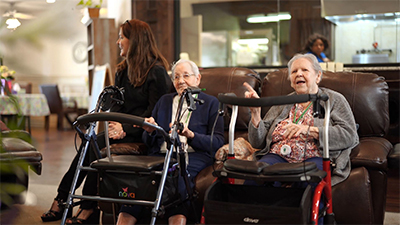
Here are a couple of questions that have a tendency to open valuable discussions:
- How do you support residents that stray, stand up to care, or come to be nervous in the evening?
- What dementia-specific training do caretakers get, and how frequently is it refreshed?
- How do you make a decision when a resident needs a higher degree of care?
- What does a typical day look like for somebody in memory care?
- How do families remain educated when a resident's actions or health and wellness changes?
The ideal answers specify. You want instances. You intend to listen to exactly how an employee responds when somebody can not remember their space, rejects a shower, or is searching for a spouse who has actually died. A thoughtful neighborhood can discuss exactly how they redirect, comfort, and record what happened so patterns can be addressed.
Also ask about medicine monitoring. Also in an encouraging setting, this component of care can be complicated. Some homeowners need timing precision, others require observation for negative effects, and some medicines connect with actions or cravings in means family members do not anticipate. An area that specializes in dementia care need to have a clear procedure for drug management and communication with outside providers.
Signs that the setting is developed genuine life, not just tours
Families frequently leave trips excited by the dining room, the activity board, or the polished welcome workdesk. Those points issue, however they are not the whole story. The even more enlightening indicators are typically quieter.
Watch just how residents relocate through the area. Are they pacing with function or straying aimlessly? Do personnel reroute with patience, or do they deal with people in a manner that appears rushed? Are citizens engaged in small, significant tasks, or just parked before a television?
Look at the bathrooms, as well. That may seem mundane, but it is one of the places where thoughtful design really shows. Clear signage, available fixtures, great illumination, and personal privacy signs can minimize accidents and humiliation. So can flooring that is easy to read visually, because some people with dementia struggle to analyze patterns or glossy surfaces.
Pay interest to sound levels. Memory loss often makes individuals more sensitive to disorder. A neighborhood that blasts songs or has consistent overhead statements might look energetic but can be wearing down for locals with cognitive decline. A calmer environment normally functions better.
If the structure feels clean yet clean and sterile, that is one thing. If it really feels clean and resided in, with familiar objects, seasonal designs, and homeowners who appear comfortable, that commonly claims a lot more. Individuals with dementia typically do much better where the area supports regular and recognition as opposed to attempting to impress visitors.
The function of respite care while you decide
Sometimes family members are ready to move on, and in some cases they are not. That space can be stressful, specifically if caregiving in your home has come to be unsustainable. This is where respite care can be incredibly useful.

A short keep provides you time to examine a neighborhood prior to making a full commitment. It additionally gives the individual with dementia a chance to experience the setting, regimens, and staff without the stress of a permanent move. If the change goes well, you discover something valuable. If it does not, you find out that also, prior to making a larger decision.
Respite stays can additionally offer family members caregivers an essential break. Dementia caregiving puts on individuals down in ways that are hard to explain to outsiders. There is the obvious physical work, yet there is likewise the constant caution, the rep, the psychological stress of seeing a loved one modification, and the unpredictability of daily. Even a time-out can make relative clearer, extra patient, and better able to decide what comes next.
Not every community manages respite care equally well. Ask whether short-term homeowners join the exact same programs as permanent locals, exactly how medicine is handled during the stay, and what interaction you will certainly get while the person is there. An excellent respite keep must seem like a genuine experience of the neighborhood, not a watered-down version.
Cost, worth, and what family members often miss at first
Price issues, yet it ought to read carefully. 2 communities may price estimate similar regular monthly prices and still supply extremely various value. One may include help with showering, meals, medicine monitoring, laundry, and activities. An additional might advertise a reduced base cost and afterwards include charges for virtually every service.
Ask for a complete explanation of what is consisted of. Find out just how rates changes as demands boost. Dementia can be steady for a while, after that move swiftly. You do not intend to select a location that looks affordable currently yet becomes tough to maintain when care requires rise.
Also inquire about move-in charges, degrees of care, and rate rises. These are not small details. A family can make a strong psychological choice and still be blindsided by the economic structure if they do not ask early. If financial resources are tight, talk honestly with the area regarding what might be flexible and whether there are different home types or service bundles.
It is also worth bearing in mind that the most affordable option is not constantly the least expensive with time. An area with far better staffing, much better supervision, and less crises can lower healthcare facility journeys, emergency relocations, and caretaker burnout. That does not imply higher cost instantly amounts to better. It means worth must be measured by the whole picture, not a heading number.
When the person is immune to moving
This is among the hardest parts of the process. A person with dementia might reject the idea of moving even when the family can see the requirement plainly. They might state they are fine, implicate others of panicing, or become upset at the tip of leaving home.
Arguing typically backfires. So does providing the step as an examination they must pass. What jobs better is frequently a gentler frame. You may speak about obtaining more help, being closer to sustain, or trying a place where dishes and drug are managed for them. If memory loss is substantial, excessive information can trigger fear. The goal is not to win a discussion. The goal is to lower distress and maintain trust.
Sometimes an action becomes needed after a healthcare facility stay, drops, medication mistakes, or unsafe wandering. In those cases, the family has less area to delay. A community that comprehends dementia should be able to assist you with shift preparation, including what to bring, how to minimize confusion on move-in day, and whether an acquainted member of the family ought to stay through the very first dish or very first evening.
The first couple of weeks matter a good deal. Sleep, hunger, and state of mind can all change during the change period. Great team understand that. They do not panic to every hard day, yet they likewise do not reject concerns as "simply modification" when patterns are clearly off.
What a solid dementia care society feels like
The finest memory care communities usually have one thing alike: they appreciate the individual, not simply the diagnosis.
That respect appears in small ways. Staff do not talk over locals. They provide enough time for responses. They offer choices that are convenient, not frustrating. They comprehend that a person can be puzzled and still prefer a particular sweater, track, food, or routine. They do not infantilize adults even if cognition has actually changed.
Families feel this distinction swiftly. Communication is clearer. Problems are taken seriously. The atmosphere feels less chaotic. You may still have tough days, since dementia is hard, but you must not feel like you are continuously combating the system to get basic care.
If you are comparing a number of areas, count on your body as high as your list. Did you really feel rushed? Did the staff appear comfortable answering hard inquiries? Did locals show up calm, tidy, and suitably engaged? Did the place really feel designed for people with memory loss, or enhanced to look like that idea?
Those impacts matter.
Choosing among senior living near me alternatives is never just concerning a building. It has to do with whether individuals inside understand the facts of dementia and can sustain an altering human being with steadiness and self-respect. That is why a mindful search pays off. It secures the person who requires care, yet it also shields the family members who will bring this choice for years.
Finding the appropriate location can take some time, and that is normal. A thoughtful search is not a hold-up. It becomes part of excellent care.
BeeHive Homes of Albuquerque NM - Assisted Living Facility provides assisted living care
BeeHive Homes of Albuquerque NM - Assisted Living Facility provides memory care services
BeeHive Homes of Albuquerque NM - Assisted Living Facility provides respite care services
BeeHive Homes of Albuquerque NM - Assisted Living Facility supports assistance with bathing and grooming
BeeHive Homes of Albuquerque NM - Assisted Living Facility offers private bedrooms with private bathrooms
BeeHive Homes of Albuquerque NM - Assisted Living Facility provides medication monitoring and documentation
BeeHive Homes of Albuquerque NM - Assisted Living Facility serves dietitian-approved meals
BeeHive Homes of Albuquerque NM - Assisted Living Facility provides housekeeping services
BeeHive Homes of Albuquerque NM - Assisted Living Facility provides laundry services
BeeHive Homes of Albuquerque NM - Assisted Living Facility offers community dining and social engagement activities
BeeHive Homes of Albuquerque NM - Assisted Living Facility features life enrichment activities
BeeHive Homes of Albuquerque NM - Assisted Living Facility supports personal care assistance during meals and daily routines
BeeHive Homes of Albuquerque NM - Assisted Living Facility promotes frequent physical and mental exercise opportunities
BeeHive Homes of Albuquerque NM - Assisted Living Facility provides a home-like residential environment
BeeHive Homes of Albuquerque NM - Assisted Living Facility creates customized care plans as residents’ needs change
BeeHive Homes of Albuquerque NM - Assisted Living Facility assesses individual resident care needs
BeeHive Homes of Albuquerque NM - Assisted Living Facility accepts private pay and long-term care insurance
BeeHive Homes of Albuquerque NM - Assisted Living Facility assists qualified veterans with Aid and Attendance benefits
BeeHive Homes of Albuquerque NM - Assisted Living Facility encourages meaningful resident-to-staff relationships
BeeHive Homes of Albuquerque NM - Assisted Living Facility delivers compassionate, attentive senior care focused on dignity and comfort
BeeHive Homes of Albuquerque NM - Assisted Living Facility has a phone number of (505) 221-6400
BeeHive Homes of Albuquerque NM - Assisted Living Facility has an address of 6401 Corona Ave NE, Albuquerque, NM 87113
BeeHive Homes of Albuquerque NM - Assisted Living Facility has a website https://beehivehomes.com/locations/albuquerque/
BeeHive Homes of Albuquerque NM - Assisted Living Facility has Google Maps listing https://maps.app.goo.gl/3oqufzNUPNMqK22LA
BeeHive Homes of Albuquerque NM - Assisted Living Facility has Facebook page https://www.facebook.com/BeeHiveHomesAbq
BeeHive Homes of Albuquerque NM - Assisted Living Facility has an YouTube page https://www.youtube.com/channel/UCNFwLedvRtjtXl2l5QCQj3A
BeeHive Homes of Albuquerque NM - Assisted Living Facility won Top Assisted Living Homes 2025
BeeHive Homes of Albuquerque NM - Assisted Living Facility earned Best Customer Service Award 2024
BeeHive Homes of Albuquerque NM - Assisted Living Facility placed 1st for Senior Living Communities 2025
People Also Ask about BeeHive Homes of Albuquerque NM
What is BeeHive Homes of Albuquerque NM Living monthly room rate?
The rate depends on the level of care that is needed. We do a pre-admission evaluation for each resident to determine the level of care needed. The monthly rate is based on this evaluation. There are no hidden costs or fees
Can residents stay in BeeHive Homes until the end of their life?
Usually yes. There are exceptions, such as when there are safety issues with the resident, or they need 24 hour skilled nursing services
Do we have a nurse on staff?
Yes. We have a registered nurse on premise 40 hours/week. In addition, we have an on-call nurse for any after-hours needs
What are BeeHive Homes’ visiting hours?
Visiting hours are adjusted to accommodate the families and the resident’s needs… just not too early or too late
Do we have couple’s rooms available?
Yes, each home has rooms designed to accommodate couples. Please ask about the availability of these rooms
Where is BeeHive Homes of Albuquerque NM located?
BeeHive Homes of Albuquerque NM is conveniently located at 6401 Corona Ave NE, Albuquerque, NM 87113. You can easily find directions on Google Maps or call at (505) 221-6400 Monday through Sunday 9:00am to 5:00pm
How can I contact BeeHive Homes of Albuquerque NM?
You can contact BeeHive Homes of Albuquerque NM - Assisted Living Facility by phone at: (505) 221-6400, visit their website at https://beehivehomes.com/locations/albuquerque/ or connect on social media via Facebook TikTok or YouTube
Visiting the North Domingo Baca Park provides accessible paths and shaded seating ideal for assisted living and elderly care residents during calm respite care outings.